BCCI to Deduct Rs 2 Crore Each from Virat Kohli, Rohit Sharma's Salaries
December 11, 2025 09:47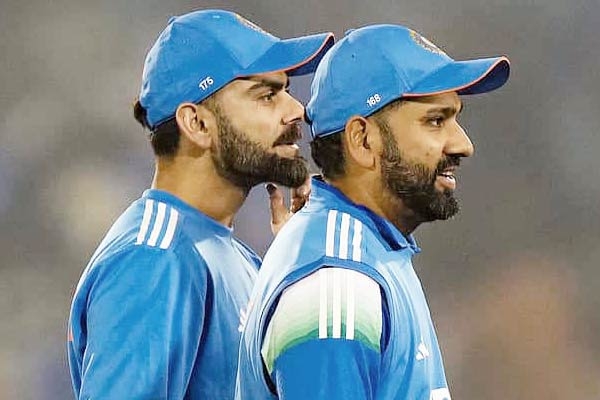
(Image source from: PTI)
The Board of Control for Cricket in India (BCCI) issues its contracts for athletes in four different categories each year. These contracts serve as official agreements that connect the country's top cricketers to the national squad. The specifics of the contracts and the payments associated with them, however, rely on the player's contributions in the three formats of cricket. The BCCI last granted central contracts to its athletes in April 2025, but there’s already talk about top players Virat Kohli and Rohit Sharma potentially facing cuts in their salaries for the next cycle. The central contract system is a well-thought-out approach aimed at rewarding players for their performance, encouraging participation, especially in Test matches, while upholding high professional standards within the team.
The BCCI’s contract structure consists of four different levels — A+, A, B, and C — with each level offering a set annual payment called retainership. This payment is given to the player no matter how many matches they participate in throughout the year and is separate from match fees they earn.
Determining these levels is an annual task carried out by the BCCI, which collaborates closely with the selection committee, head coach, and team captain. Here’s how the levels are decided:
Priority in Formats and Participation: In the past, players who show outstanding skills and dedication to Test cricket are preferred for the higher payment levels (Grade A and above). The A+ category is a top tier strictly reserved for the best players in all formats. India’s captain for Tests and ODIs, Shubman Gill, is likely to be moved up to the A+ level.
Performance and Consistency: A player's contract level largely depends on their steady performance and influence on the field during the previous contract period. Those who perform exceptionally well often get promoted, while a decline in performance or fitness might lead to lower grades.
Minimum Match Requirement: Regardless of their reputation, a player must take part in a specific number of games to qualify for even the lowest Grade C. Typically, they need to have played a minimum number of international matches during the cycle (for example, 3 Tests, 8 ODIs, or 10 T20Is). It’s important to note that simply playing more matches does not automatically give a player a higher grade.
Dedication to Domestic Cricket: Recently, the BCCI has emphasized the requirement that centrally contracted players must be available for domestic red-ball competitions like the Ranji Trophy when they are not engaged with the national team. Compliance with this rule from the board is still debated. In the past, players like Shreyas Iyer and Ishan Kishan have lost their central contracts due to not following this requirement.
Currently, Virat Kohli and Rohit Sharma are in the A+ group, but both are likely to be moved down since they are not playing in Test and T20I matches anymore. Ravindra Jadeja, who has also stopped playing T20Is, could still stay in the A+ group because he is an active player on India's Test team.
If Kohli and Rohit are moved to the A group, they would each receive Rs 2 crore less with the 'A contract' (Rs 5 crore) compared to the 'A+ contract' (Rs 7 crore).