(Image source from: AP)
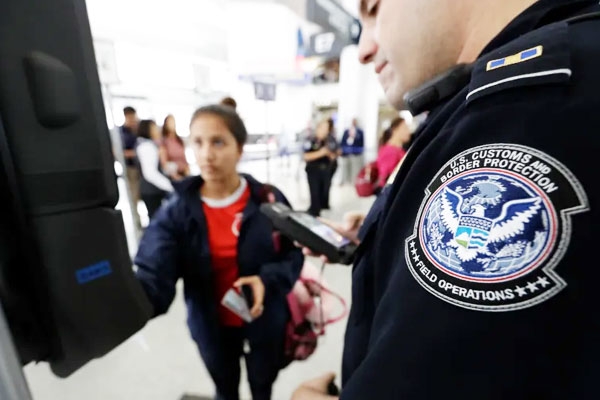
Visitors from many nations, including the UK, might need to share their social media activity from the past five years to enter the United States based on a new idea revealed by American authorities.
This new requirement would impact individuals from many countries who can travel to the US for up to 90 days without needing a visa, provided they complete an Electronic System for Travel Authorization (ESTA) form. Since he resumed office in January, President Donald Trump has taken steps to tighten US borders more broadly, mentioning national security as the reason. Experts believe this new initiative could create challenges for potential tourists or infringe on their digital rights.
When asked if this plan might cause a significant decline in visitors to the US, Trump replied that he was not worried. "No. We’re doing really well," the president stated on Wednesday. "We just want people to come here safely. We are focused on safety. We want security. We want to ensure that the wrong individuals are not allowed to enter our nation." The United States anticipates a large increase in foreign visitors next year as it co-hosts the men's football World Cup with Canada and Mexico, along with the 2028 Olympics taking place in Los Angeles. This proposal was submitted by the Department of Homeland Security (DHS) and its agency, Customs and Border Protection (CBP), and it appeared in the Federal Register, the official government publication.
The proposal indicates that "the information required will ask ESTA applicants to submit their social media details from the past five years," but does not specify what exact details will be needed. The current ESTA only requests a small amount of information from travelers and has a one-time fee of $40 (£30). It is available to citizens from around 40 countries, including the UK, Ireland, France, Australia, and Japan, and permits them to travel to the US multiple times within a two-year span.
In addition to collecting social media data, the new proposal suggests gathering applicants' phone numbers and email addresses used in the past five and ten years, respectively, along with more details about their family members. The document references an executive order from Trump issued in January, named "Protecting the United States From Foreign Terrorists and Other National Security and Public Safety Threats."
The recently introduced plan for collecting ESTA data from travelers encourages public feedback for a period of 60 days. A representative from CBP stated, "There hasn’t been any change for individuals coming to the United States. This isn't a final regulation; it’s merely the initial phase of initiating a conversation about new policy possibilities aimed at ensuring the safety of the American population." Sophia Cope, from the digital rights group Electronic Frontier Foundation, criticized the proposal, informing the New York Times that it might "worsen violations of civil liberties." On the other hand, immigration law firm Fragomen indicated there might be real consequences, as applicants could experience longer waiting times for ESTA approvals. Previously, the Trump administration had announced it would look into social media accounts when evaluating foreign nationals applying for student visas or H-1B visas designed for skilled workers.
The state department mentioned it would carry out "online presence" checks for applicants and their dependents, and required that all privacy settings of social media accounts be set to "public" to allow for this review. An announcement on the US Embassy and Consulate's website in Mexico states that certain visa applicants must provide usernames or handles from all social media platforms they have used in the past five years. It cautions that failing to list any social media information could result in both current and future visas being refused. A high-ranking official from the state department commented on the student visa approach: "American citizens expect their government to do everything possible to enhance our country's safety, and that is exactly what the Trump Administration is striving to achieve every day." Officers were directed to look out for individuals "who promote, assist, or support known foreign terrorists and other threats to national security; or who commit illegal anti-Semitic harassment or violence."
As part of the administration’s wider initiative to strengthen borders, officials recently indicated that the current travel ban, which impacts 19 countries across Africa, the Middle East, and the Caribbean, might be broadened soon. This announcement followed a shooting incident involving two National Guard members in Washington DC, with an Afghan individual accused of involvement. Experts have previously indicated that the travel policy adjustments made during Trump's presidency have influenced the US tourism sector. Earlier this year, the World Travel & Tourism Council stated that the US was uniquely expected to see a drop in international visitor expenditures by 2025, among 184 economies reviewed.
Additional policies from the Trump administration have seemed to impact tourism to the nation, including many Canadians choosing to avoid travel to the US in protest against Trump's tariffs. October marked the tenth consecutive month of falling Canadian visitors to the US. Historically, Canadians have represented about a quarter of all international travelers to the US, spending over $20 billion annually, according to the US Travel Association.